A Brief introduction of the Speaker
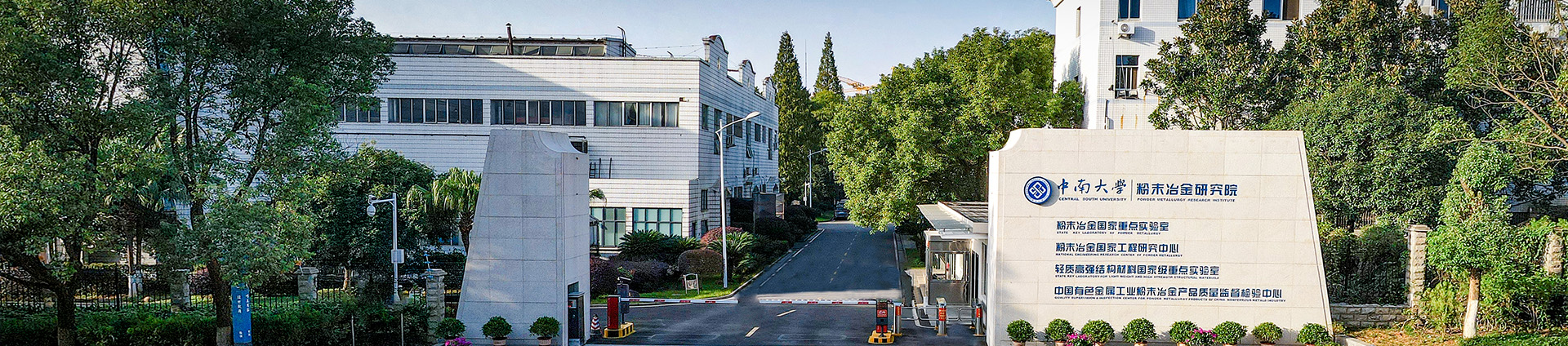
Kai Wang obtained his bachelor's and master's degrees from the Powder Metallurgy Research Institute of Central South University between 2010 and 2017. He earned his Ph.D. from RWTH Aachen University in Germany from 2017 to 2021, during which he developed a quantitative off-diagonal phase-field model and conducted research on various phase transformation processes. In the same year, he joined the Forschungszentrum Jülich in Germany as a postdoctoral researcher, focusing on the dissociation processes of solid oxide fuel cells using multi-scale simulation methods. In May 2023, he began his postdoctoral research at the Technical University of Darmstadt, where his work primarily involves developing a multi-physics coupled phase-field model based on Fermi level and defect chemistry, reconstructing the spatial charge layer distribution, and investigating abnormal grain growth during the sintering of SrTiO3. During his research career, he has published 14 papers in journals such as Physical Review B and Physical Review Materials. He has also participated in the 4th and 5th International Phase-Field Conferences, delivering oral presentations at both events.
Abstract
Since decades, phase field method has been developed as a promising tailor of material design. Not only quantitative phase field model, but also key experiments validation assist the quantitative phase field simulations, In this presentation, the novel thermodynamic consistent nondiagonal phase field model obeying the Onsager's relation and providing the universal framework in the phase field community is introduced. The capability of the quantitative phase field model is validated with different phase transformations and key experiments, Furthermore, we also explore the quantitative phase field simulations in the field of finctional oxide ceramics. ln the princrple of defect chemistry linked to fermilevels, we quantitively reproduce the space charge layer formation in SrTiO3 bicrystals. Additionally, we employ phase field simulations to explore the phenomenon of abnormal grain growth in SrTiO3 polycrystalline material during sintering processes.